PU Comfort Flooring vs Epoxy Resin Flooring: Which Is Right for Your Property?
Choosing the right flooring for your property involves more than simply finding a colour or finish you like.
Whether you’re renovating your home, upgrading a commercial space or planning a new flooring installation, durability, comfort, maintenance and long-term performance all play an important role.
Two popular resin flooring options are PU Comfort Flooring and epoxy resin flooring.
Both offer seamless finishes, excellent design possibilities and practical advantages over many traditional flooring materials. However, their properties differ, making each system better suited to particular applications.
So, when comparing PU flooring vs epoxy flooring, which should you choose?
In this guide, we’ll explore the key differences between polyurethane comfort flooring and epoxy resin flooring to help you make an informed decision.
What Is PU Comfort Flooring?
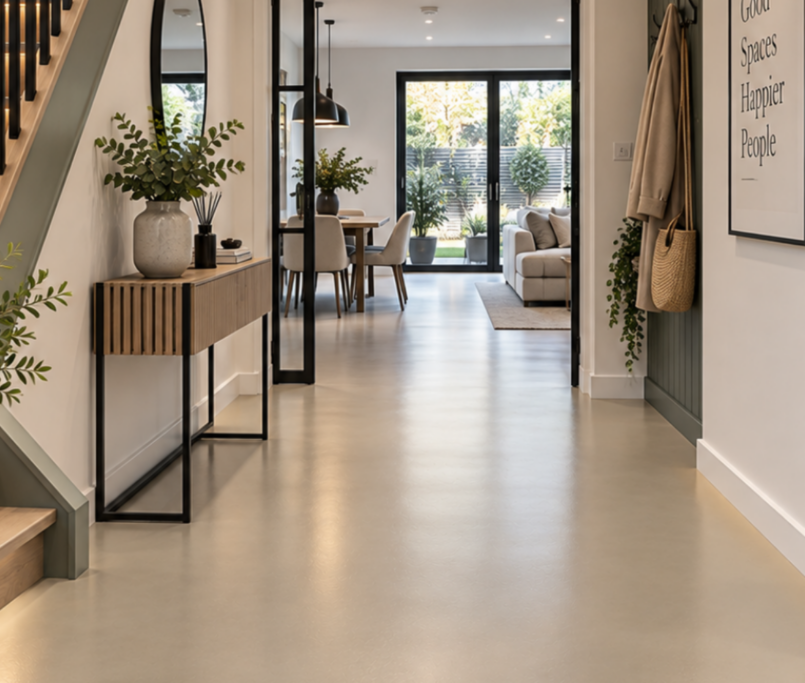
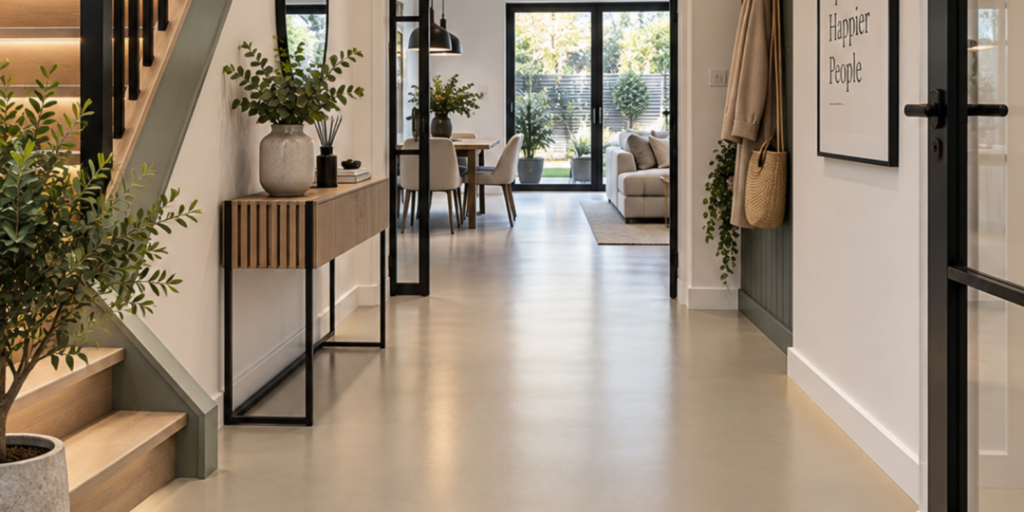
PU Comfort Flooring is a specialist polyurethane resin flooring system designed to combine a seamless appearance with a more resilient, comfortable surface.
Unlike rigid flooring materials, polyurethane comfort systems incorporate a degree of elasticity, creating a more forgiving surface underfoot.
This makes them particularly attractive for environments where people spend significant amounts of time standing or walking.
PU Comfort Flooring is commonly considered for residential interiors and selected commercial spaces where comfort, aesthetics and everyday practicality are important.
Key Benefits of PU Comfort Flooring
- Comfortable underfoot: Its resilient properties provide a more forgiving surface than many traditional hard flooring materials.
- Seamless appearance: Creates a continuous finish without conventional grout lines.
- Contemporary design: Available in a range of colours and finishes to complement modern interiors.
- Easy maintenance: Smooth, seamless surfaces simplify routine cleaning.
- Flexible properties: Designed to accommodate limited movement within the flooring system, subject to the product specification.
- Residential versatility: Suitable for a variety of living spaces, including kitchens, hallways and open-plan interiors.
For homeowners looking to achieve a modern interior without compromising on everyday comfort, PU Comfort Flooring can be an excellent option.
What Is Epoxy Resin Flooring?
Epoxy resin flooring is a durable flooring system created by combining epoxy resin with a suitable hardener.
When professionally installed and cured, the materials form a strong, bonded surface designed to withstand regular use.
Epoxy flooring is widely used across residential, commercial and industrial environments because of its durability and versatility.
Depending on the specification, epoxy systems can provide resistance to abrasion, impacts and certain chemicals.
They can also incorporate decorative finishes, slip-resistant aggregates and other performance features to suit the intended application.
Key Benefits of Epoxy Resin Flooring
- Excellent durability: Suitable systems can withstand demanding foot traffic and mechanical loads.
- Strong surface protection: Helps protect properly prepared concrete substrates from everyday wear.
- Chemical resistance: Specialist formulations can resist exposure to selected oils, chemicals and cleaning agents.
- Versatile finishes: Available in a variety of colours, decorative effects and textures.
- Low maintenance: Seamless finishes are generally straightforward to clean.
- Commercial and industrial suitability: Frequently specified for workshops, warehouses, garages and other demanding environments.
For properties requiring a robust, hard-wearing surface, epoxy resin flooring is often a practical choice.
PU Comfort Flooring vs Epoxy Flooring: What’s the Difference?
Although both systems belong to the resin flooring family, their characteristics can differ significantly.
Understanding these differences is essential when selecting a flooring solution that meets your property’s requirements.
1. Comfort Underfoot
One of the most noticeable differences between PU Comfort Flooring and epoxy resin flooring is how they feel underfoot.
PU Comfort Flooring is designed with resilience in mind. Its elastic properties create a slightly more forgiving surface, making it attractive for spaces where people spend extended periods standing or walking.
Epoxy resin flooring generally produces a harder, more rigid finish. While this provides excellent durability for demanding applications, it does not typically offer the same level of underfoot comfort as a dedicated PU comfort system.
For residential living areas, kitchens and selected commercial interiors, PU Comfort Flooring may therefore be the preferred option.
However, for environments where surface strength and mechanical performance are the main priorities, epoxy flooring may be more appropriate.
2. Durability and Wear Resistance
Both polyurethane and epoxy flooring systems can provide excellent durability when correctly specified and installed.
However, their performance characteristics are different.
Epoxy resin flooring is frequently selected for environments exposed to heavy equipment, machinery, wheeled traffic and demanding operational conditions.
Its rigid structure and availability in specialist high-build systems make it particularly useful for industrial and commercial applications.
PU Comfort Flooring is designed primarily to balance durability with resilience and comfort.
Although suitable systems can withstand everyday foot traffic and general wear, they are not necessarily intended to replace heavy-duty industrial flooring.
The correct choice depends on the loads, traffic levels and conditions the floor will experience.
3. Appearance and Design Options
Both PU Comfort Flooring and epoxy resin flooring offer excellent design flexibility.
PU Comfort Flooring is particularly popular for achieving smooth, understated finishes that complement contemporary interiors.
Its seamless appearance works beautifully in open-plan living spaces, modern kitchens, offices and reception areas.
Epoxy resin flooring also offers considerable design freedom.
Depending on the system, finishes may include:
- Solid colours
- Decorative flakes
- High-gloss finishes
- Matt or satin finishes
- Textured, slip-resistant surfaces
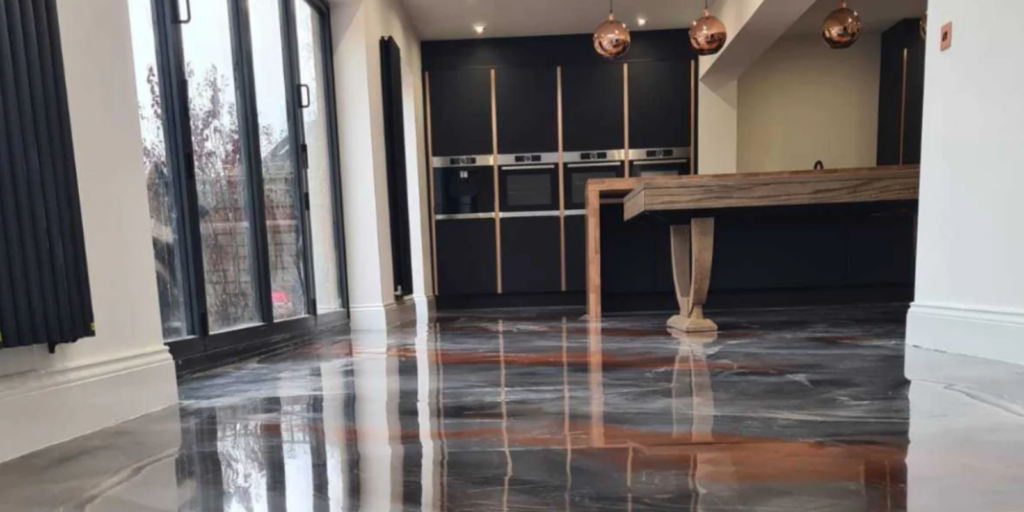
- Decorative resin effects
For homeowners seeking a minimalist interior, PU Comfort Flooring can create a sophisticated finish.
For garages, commercial premises or industrial environments, epoxy flooring provides a wide range of practical and decorative options.
Ultimately, both systems can look exceptional when professionally installed.
4. Maintenance and Cleaning
One of the main advantages shared by both flooring systems is their relatively straightforward maintenance.
Because resin flooring creates a continuous surface, there are no conventional grout lines where dirt and debris can accumulate.
Routine sweeping, vacuuming and damp mopping with suitable cleaning products will generally help maintain the appearance of either system.
However, maintenance requirements can vary depending on the finish.
PU Comfort Flooring should be cleaned using products and methods approved for the specific polyurethane system.
Similarly, epoxy flooring may require specialist cleaning procedures in industrial environments where oils, chemicals or heavy contamination are present.
Both systems benefit from regular maintenance and prompt attention to damage.
5. Slip Resistance
Slip resistance is an important consideration when choosing any flooring system.
Both polyurethane and epoxy resin flooring can be specified with slip-resistant properties.
However, neither material should automatically be considered slip-resistant simply because it is a resin floor.
The level of slip resistance depends on factors such as surface texture, system specification, contaminants and whether the floor is used in wet or dry conditions.
For example, a commercial kitchen, workshop or entrance area may require a different surface specification from a residential living room.
At Resin Finesse, selecting the correct flooring system involves considering how the space will be used and what performance characteristics are required.
6. Installation Requirements
Both PU Comfort Flooring and epoxy resin flooring require professional installation to achieve reliable long-term performance.
Before either system is applied, the existing substrate must be assessed and prepared.
This may involve:
- Checking substrate moisture levels
- Assessing the condition of the concrete or existing surface
- Repairing cracks and defects
- Removing contaminants
- Mechanically preparing the substrate
- Applying suitable primers and system layers
The installation process, number of layers and curing requirements will depend on the selected product.
Temperature, humidity and substrate conditions can also affect installation.
Although some systems may be installed relatively quickly, the floor must be allowed to cure sufficiently before it is exposed to foot traffic, furniture or equipment.
Professional installation helps ensure that the flooring performs as intended.
Is PU Comfort Flooring More Expensive Than Epoxy Flooring?
Cost is often an important factor when comparing PU flooring vs epoxy flooring.
However, there is no universal answer to which system is more expensive.
The price of a resin flooring installation depends on several factors, including:
- The size of the area
- Existing substrate condition
- Preparation and repair requirements
- Flooring system specification
- Number and thickness of layers
- Decorative finishes
- Site access and installation complexity
PU Comfort Flooring can involve specialist materials and multiple system layers, which may influence installation costs.
Epoxy resin flooring also varies considerably in price, from relatively straightforward coatings to heavy-duty industrial systems and decorative installations.
Rather than comparing price alone, property owners should consider the long-term suitability and performance of each system.
A professionally specified floor that meets the requirements of the environment can provide better value than a cheaper system that is unsuitable for its intended use.
Which Resin Flooring Is Best for Residential Properties?
For residential properties, the ideal flooring system depends on the room and how it will be used.
Living Rooms and Open-Plan Spaces
PU Comfort Flooring is often an attractive choice for contemporary living spaces.
Its resilient properties and seamless appearance make it particularly suitable for homeowners seeking comfort alongside modern design.
The continuous finish can also create a sense of flow between adjoining rooms.
Kitchens and Dining Areas
Both systems can be suitable for kitchens and dining areas, depending on the specification.
PU Comfort Flooring offers a more forgiving surface underfoot, which can be appealing in kitchens where people spend considerable time standing.
Epoxy flooring provides a harder finish and may be preferred where particular durability or decorative characteristics are required.
Appropriate slip resistance and cleaning requirements should be considered for either system.
Residential Garages
For residential garages, epoxy resin flooring is frequently the more suitable option.
Specialist epoxy systems can be designed to withstand vehicle traffic, abrasion and exposure to selected automotive fluids.
Decorative flake finishes and textured coatings can also provide an attractive, practical surface.
A dedicated PU Comfort Flooring system would not usually be the first choice for a garage exposed to regular vehicle traffic.
Which Flooring System Is Better for Commercial Properties?
Commercial flooring requirements can vary considerably depending on the nature of the business.
An office reception area has very different demands from a warehouse or vehicle workshop.
Offices and Reception Areas
PU Comfort Flooring can be an excellent choice for modern offices, reception areas and selected commercial interiors.
Its seamless appearance creates a professional finish, while its resilient properties may provide additional comfort in areas with regular pedestrian traffic.
Retail and Showroom Spaces
Both polyurethane and epoxy flooring systems can work well in retail and showroom environments.
PU Comfort Flooring may be preferred where comfort and contemporary aesthetics are priorities.
Epoxy resin flooring can offer robust performance and decorative flexibility, particularly in areas exposed to heavier equipment or demanding traffic.
Warehouses and Industrial Facilities
For warehouses, workshops and industrial facilities, specialist epoxy resin flooring is frequently specified.
These environments may require resistance to heavy loads, abrasion, mechanical impacts and chemical exposure.
However, certain industrial polyurethane systems can also be suitable for demanding applications.
It is important to distinguish these specialist industrial PU systems from PU Comfort Flooring, which is designed for different performance requirements.
The correct system should always be selected according to the operational demands of the facility.
PU Comfort Flooring vs Epoxy Flooring: A Quick Comparison
| Feature | PU Comfort Flooring | Epoxy Resin Flooring |
|---|---|---|
| Comfort underfoot | More resilient and forgiving | Generally harder and more rigid |
| Appearance | Seamless, contemporary finish | Seamless with extensive decorative options |
| Durability | Suitable for everyday residential and selected commercial use | Specialist systems suitable for demanding environments |
| Flexibility | Greater elasticity in comfort systems | Generally more rigid |
| Maintenance | Straightforward routine cleaning | Straightforward, depending on environment |
| Slip resistance | Available with suitable specifications | Available with suitable specifications |
| Residential living areas | Excellent option | Suitable depending on requirements |
| Garages and workshops | Generally not the preferred system | Often an excellent choice |
| Industrial environments | Not normally intended for heavy-duty applications | Specialist systems widely used |
| Cost | Depends on specification and preparation | Depends on specification and preparation |
Both systems have their strengths, and the best option will depend on the individual project.
Why Choosing the Right Resin Flooring System Matters
Selecting a flooring system based solely on appearance or initial cost can lead to problems if the material is unsuitable for the environment.
A floor designed for residential foot traffic may not perform adequately in a busy industrial workshop.
Likewise, a heavy-duty industrial flooring system may provide more rigidity than is desirable in a contemporary living space.
Factors such as substrate condition, traffic levels, moisture exposure, cleaning requirements and desired appearance should all influence the decision.
At Resin Finesse, we understand that no two flooring projects are identical.
By considering the specific requirements of each property, we can help customers explore suitable resin flooring solutions that balance aesthetics, practicality and long-term performance.
Frequently Asked Questions About PU and Epoxy Resin Flooring
1. Is polyurethane flooring better than epoxy flooring?
Neither polyurethane nor epoxy flooring is automatically better than the other.
PU Comfort Flooring is often preferred for residential and selected commercial interiors where comfort, flexibility and appearance are important.
Epoxy resin flooring is frequently chosen for garages, workshops and industrial environments requiring robust surface performance.
The best option depends on the intended application and the specific flooring system.
2. Which is more comfortable underfoot, PU or epoxy flooring?
PU Comfort Flooring is generally more comfortable underfoot than traditional rigid epoxy flooring.
Its elastic properties create a more forgiving surface, making it attractive for spaces where people spend extended periods standing or walking.
Epoxy flooring typically provides a harder finish, which can be advantageous in environments requiring greater mechanical resistance.
3. Is PU flooring more expensive than epoxy flooring?
The cost depends on the flooring specification, area size, substrate condition and installation requirements.
Some PU Comfort Flooring systems may cost more than basic epoxy coatings, but specialist epoxy installations can also involve significant material and preparation costs.
A detailed quotation is the best way to compare suitable systems for a particular property.
4. Which flooring system is better for commercial properties?
Both systems can be suitable for commercial properties.
PU Comfort Flooring is often attractive for offices, reception areas and selected retail environments where comfort and appearance are priorities.
Epoxy resin flooring is frequently specified for workshops, warehouses and other demanding environments.
The correct choice depends on traffic levels, operational requirements and the desired finish.
5. Does polyurethane flooring last longer than epoxy flooring?
Neither flooring material has a universally longer lifespan.
Longevity depends on the specific product, installation quality, substrate preparation, traffic levels and maintenance.
A properly specified epoxy system may provide excellent service in a demanding industrial environment, while PU Comfort Flooring can deliver many years of performance in suitable residential or commercial settings.
Choosing the right system for the intended application is essential.
Find the Right Resin Flooring Solution with Resin Finesse
Whether you’re drawn to the comfort and contemporary appearance of PU Comfort Flooring or the strength and versatility of epoxy resin flooring, choosing the correct system is essential.
Both offer excellent advantages when professionally specified and installed.
At Resin Finesse, we provide high-quality resin flooring solutions for residential, commercial and industrial properties.
From seamless polyurethane comfort floors to durable epoxy resin installations, we help customers find flooring solutions that complement their spaces and meet their practical requirements.
Not sure whether PU Comfort Flooring or epoxy resin flooring is right for your property?
Contact Resin Finesse today to discuss your project and explore the flooring options available.
Our team can help you understand the benefits of each system and identify a suitable solution for your home or business.